

Read below my May 2026 Newsletter, which was sent on 29 May 2026. You can sign up for future editions by clicking here.
Sgroliwch i lawr am y fersiwn Cymraeg.
Hello and welcome back to my newsletter.
Over the last two editions, I wrote about the impact of the war in Iran on energy policy, heating oil, household bills, the debate around North Sea oil and gas, renewables, electricity costs, and emissions.
In these, I mainly focused my efforts on the deliberately limited perspective of reducing bills for consumers in the short to medium term.
In this edition, I expand the horizons of debate and consider the broader costs of climate change: the costs of adaptation, and the greater costs of failing to adapt.
Elsewhere in this newsletter, I write about the detention of the Global Sumud Flotilla volunteers, and the allegations of abuse levelled against the Israeli authorities while in their custody, plus some far more pleasant dispatches from recently attended events in the constituency.
Thanks as always for reading. And remember, you can scroll down to the bottom to read this newsletter in Welsh.
With every good wish, Steve
Extreme heat
On Sunday, May 24, the record was broken for the hottest ever day in May. On Monday, May 25, it was broken again. At an airfield in south London, the mercury did not drop below 21.3C overnight. That meets the criteria to be called a ‘tropical night’, where nighttime temperatures do not drop below 20C. I write this on Tuesday, May 26. The record is set to be broken again today.
Now, I could have written this at any time of the year, and I truly do not intend to seem alarmist (for this is the most common accusation levelled at those expressing concern about our changing climate) but I hope the timing will help to sharpen minds to the real, tangible, human reality of climate change: pets suffering as temperatures push well past the point at which they can cool themselves, sleeplessness, sweat, sunburn, elderly relatives killed by extreme heat (1504 people died this way in the UK last summer), children drowned as they seek refuge in open water (three on Monday alone, in Halifax, Rotheram, and Tamworth, in addition to one on Sunday in Lincoln – my heart breaks for their families).
I cite these tragedies to illustrate the cost of increasingly likely extreme weather, as talk of Celsius and heat pumps and biodiversity are seen as too abstract.
We have always had heatwaves and extreme weather. But they have become more likely, more extreme, more sustained, demonstrably so. The costs will be paid by the taxpayer. The poor will suffer disproportionately. The sick and old will die younger.
This will likely continue well past the lifetimes of most people reading this newsletter.
Managing risk
With seemingly clairvoyant timing, the UK’s Climate Change Committee published a report as temperatures began to rise last week, titled the Fourth Independent Assessment of UK Climate Risk. Several figures jumped out at me:
- Climate change is currently costing the country about £60bn per year (~2% of GDP). This is nearly exactly the same as our current defence budget.
- The cost of inaction is increasing dramatically. Without adaptation, climate change could reach £260bn per year by 2050. That is a little over double the current cost of the State Pension alone.
- Heatwaves are expected to exceed 40C in all parts of the UK by 2050.
- 92% of existing British homes will be at risk of overheating by 2050.
Here is the rub: all of this is talking about preventative spending on climate change adaptation. Not decarbonisation, not eating less meat, not driving electric cars, not whether the rest of the world does any of these things to a greater or lesser degree.
These outcomes are solely based on whether or not we front the cost to adapt our own physical infrastructure against weather it was never designed for. It means growing more food domestically, building flood defences, investing in air conditioning, upgrading the water system.
That is scary, in that this is a challenge solely to protect our future livelihoods here in the UK. It is also a cause for hope, because it is achievable:
The Committee estimates that investment of around £11 billion per year (range £7–£22 billion, 2025 prices) is needed from the public and private sectors. This will generate returns in the tens of billions.
£11 billion per year. For the sixth-largest economy in the world, one with a Treasury that raises £938 billion in taxes a year, this is patently affordable. It is simply a question of prioritisation.
A stitch in time
Earlier his month I was in Llanfyllin to attend a screening of a film on the impact of climate change, titled ‘The People’s Emergency Briefing.’
It featured a series of contributions from experts and was originally shown to parliamentarians and other public figures in Westminster last year (something I knew all too well: I was one of a minority of parliamentarians who attended these lectures, in person, at the time). If you want to catch a screening, it film will be shown again next month at Welshpool Town Hall on June 29, from 6.15pm for a 6.45pm start, with plans afoot to also show it elsewhere in the constituency as well.
After the screening, attendants discussed the film and ways in which people can press the government to act more decisively on climate change. It suggested that I lobby the Prime Minister to commit to televised briefings on the climate crisis, as we did during Covid – something which I have committed to doing.
The event was covered by the County Times. Reaching the end of the article, I couldn’t help but notice a comment stating: “Someone please tell these local idiots to sort out roads and doctors appointments.”
This summarises the core of my argument on climate change. Yes, exactly, we must sort out roads and doctor’s appointments, because fixing these immediate, tangible things make the most immediate improvements to people’s lives, to the lives of my constituents. In the most cynical terms, if governments do not fix roads and doctor’s appointments, they will not get re-elected.
Preventing the destruction of the natural world is a worthy and necessary aim in and of itself. We have a duty, as the species doing the damage, to reverse this. And if we do not do so, our own lives will become measurably harder to sustain.
Even if you do not care about the fate of non-human species, and only care about roads and doctor’s appointments, then I hope the raw economics will convince you, as I have attempted to illustrate in the section above.
You, the taxpayer, will be poorer in the future if we do not invest in climate change adaptation today. Food will become harder to grow and more expensive. Flooding and extreme heat will damage roads. Reliable access to water will become scarcer.
Climate change is real, unavoidable, and expensive. Plenty of things in life are, not least road maintenance and health spending. If we do not take the necessary decisions now, we will be forced to make them in the future, and at greater cost.
Global Sumud Flotilla
Last week, one of my constituents was detained by the Israeli Defence Forces for attempting to deliver humanitarian aid to Gaza (he was the skipper). I put out the following statement.
On [19 May] a Montgomeryshire and Glyndŵr constituent was kidnapped by Israeli authorities for taking part in the Global Sumud Flotilla, a civilian mission attempting to deliver symbolic humanitarian aid to Gaza by sea.
50 vessels were intercepted and around 430 people were detained while the flotilla was in international waters. This is in contravention of maritime law.
These detainees, including my constituent, have since been deported to Turkey. They have alleged abuse and there is evidence that many were severely beaten, with an Israel-based rights organisation reporting that at least three people had been hospitalised.
At least 15 detainees have claimed they were sexually assaulted while in Israeli custody, some of their number claim they were raped. The Israeli Security Minister, Itamar Ben-Gvir, posted a video of him personally taunting the detainees while they were physically bound.
Several European states are now considering sanctioning Ben-Gvir. The UK Government has already done so, alongside Finance Minister Bezalel Smotrich, for their incitement of settler violence against Palestinian communities. These men have both been integral architects of the genocide of the Palestinian people in Gaza and the displacement of Palestinians in the West Bank.
Prior to the deportation of the detainees, I yesterday provided the below statement to the Cambrian News outlining the steps I had taken to pressure the Foreign, Commonwealth & Development Office to secure the release of the constituent:
“I am pulling all the available levers I have as an MP to enlist the Foreign Office’s assistance in getting [the constituent] released from Israeli detention.
“Prior to the flotilla’s interception, I wrote a letter to the Foreign Secretary asking what plans had been put in place to protect participants, to offer consular support, and to warn the Israeli authorities against acting in contravention of international and maritime law.
“Since the interception of the flotilla, I have cowritten further letters and public statements alongside other MPs, demanding the government take immediate action.
“I have also personally contacted a Parliamentary Private Secretary at the Foreign Office in an attempt to further pressure them to act.”
Machynlleth Pride and János Arany
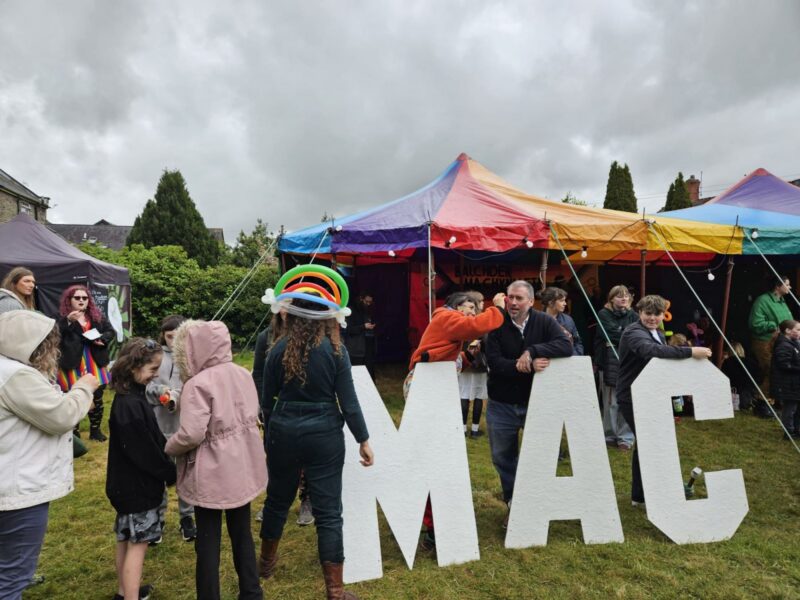
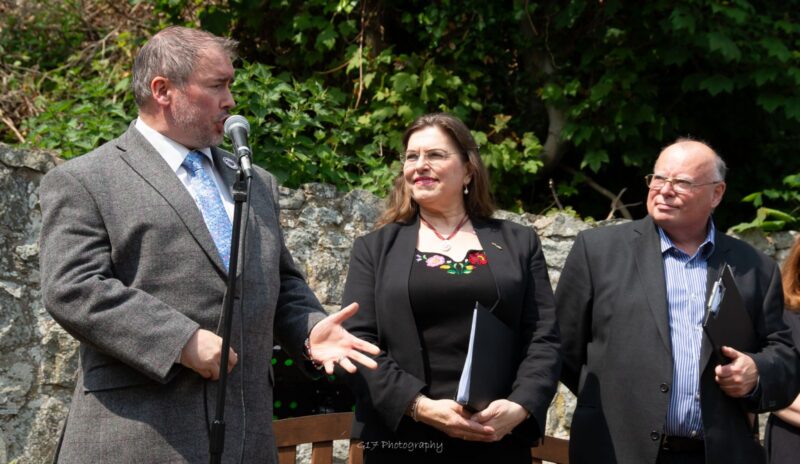
Finally, pictures from some other events I attended recently in the constituency, Balchder Machynlleth Pride and a celebration of Hungarian poetry in Montgomeryshire.
Mach Pride was another huge success this year, a testament to the town’s vibrant community and a clear example of why they should win Town of Culture.
János Arany is Hungary’s National Poet, and he wrote a poem about Montgomery Castle in 1857, about the imagined slaughter of hundreds of bards as they protested against Edward I of England. I welcomed members of the Hungarian community there for an event celebrating the town’s interesting connection with Hungarian culture.
That is all for this month. See you next time.
Helô a chroeso yn ôl i’m cylchlythyr.
Dros y ddau rifyn diwethaf, ysgrifennais am effaith y rhyfel yn Iran ar bolisi ynni, olew gwresogi, biliau cartrefi, y ddadl ynghylch olew a nwy Môr y Gogledd, ynni adnewyddadwy, costau trydan, ac allyriadau.
Yn y rhain, canolbwyntiais fy ymdrechion yn bennaf ar y persbectif cyfyngedig yn fwriadol o leihau biliau i ddefnyddwyr yn y tymor byr i ganolig.
Yn y rhifyn hwn, rwy’n ehangu gorwelion y ddadl ac yn ystyried costau ehangach newid hinsawdd: costau addasu, a chostau mwy methu ag addasu.
Mewn mannau eraill yn y cylchlythyr hwn, rwy’n ysgrifennu am atal wirfoddolwyr gyda Global Sumud Flotilla, a’r honiadau o gam-drin a wnaed yn erbyn awdurdodau Israel tra yn eu dalfa, ynghyd â rhai negeseuon llawer mwy dymunol o ddigwyddiadau a fynychwyd yn ddiweddar yn yr etholaeth.
Diolch fel bob amser am ddarllen. A chofiwch, gallwch sgrolio i lawr i’r gwaelod i ddarllen y cylchlythyr hwn yn y Gymraeg.
Gyda phob dymuniad da, Steve
Gwres eithafol
Ar ddydd Sul, Mai 24, torrwyd y record am y diwrnod poethaf erioed ym mis Mai. Ar ddydd Llun, Mai 25, torrwyd ef eto. Mewn maes awyr yn ne Llundain, ni syrthiodd y mercwri islaw 21.3C dros nos. Mae hynny’n bodloni’r meini prawf i’w alw’n ‘noson drofannol’, lle nad yw tymereddau’r nos yn gostwng islaw 20C. Rwy’n ysgrifennu hwn ddydd Mawrth, Mai 26. Fe all y record gael ei dorri eto heddiw.
Nawr, gallwn fod wedi ysgrifennu hwn ar unrhyw adeg o’r flwyddyn, ac nid wyf yn bwriadu ymddangos yn ofnus o gwbl (oherwydd dyma’r cyhuddiad mwyaf cyffredin a wneir at y rhai sy’n mynegi pryder am ein hinsawdd sy’n newid) ond rwy’n gobeithio y bydd yr amseru’n helpu i hogi meddyliau at realiti dynol, pendant, go iawn newid hinsawdd: anifeiliaid anwes yn dioddef wrth i’r tymereddau fynd ymhell heibio’r pwynt lle gallant oeri eu hunain, diffyg cwsg, chwys, llosg haul, yr henoed yn cael eu lladd gan wres eithafol (bu farw 1504 o bobl fel hyn yn y DU yr haf diwethaf), plant wedi boddi wrth iddynt geisio lloches mewn dŵr agored (tri ddydd Llun yn unig, yn Halifax, Rotheram, a Tamworth, yn ogystal ag un ddydd Sul yn Lincoln – mae fy nghalon yn torri dros eu teuluoedd).
Rwy’n dyfynnu’r trasiedïau hyn i ddangos cost tywydd eithafol sy’n gynyddol debygol, gan fod siarad am Celsius a phympiau gwres a bioamrywiaeth yn cael eu gweld fel rhywbeth rhy haniaethol.
Rydym wedi cael tonnau gwres a thywydd eithafol erioed. Ond maent wedi dod yn fwy tebygol, yn fwy eithafol, yn fwy cynaliadwy, yn amlwg felly. Bydd y trethdalwr yn talu’r costau. Bydd y tlotaf yn dioddef yn anghymesur, ac yn marw’n iau.
Mae’n debyg y bydd hyn yn parhau ymhell y tu hwnt i oes y rhan fwyaf o bobl sy’n darllen y cylchlythyr hwn.
Rheoli risg
Gyda’r amseru a oedd yn ymddangos yn glirweledol, cyhoeddodd Pwyllgor Newid Hinsawdd y DU adroddiad wrth i’r tymereddau ddechrau codi yr wythnos diwethaf, o’r enw’r Pedwerydd Asesiad Annibynnol o Risg Hinsawdd y DU. Neidiodd sawl ffigur allan i mi:
- Ar hyn o bryd mae newid hinsawdd yn costio tua £60bn y flwyddyn i’r wlad (~2% o CMC). Mae hyn bron yn union yr un fath â’n cyllideb amddiffyn bresennol.
- Mae cost diffyg gweithredu yn cynyddu’n ddramatig. Heb addasu, gallai newid hinsawdd gyrraedd £260bn y flwyddyn erbyn 2050. Mae hynny ychydig dros ddwbl cost bresennol Pensiwn y Wladwriaeth yn unig.
- Disgwylir i donnau gwres fod yn fwy na 40C ym mhob rhan o’r DU erbyn 2050.
- Bydd 92% o gartrefi presennol Prydain mewn perygl o orboethi erbyn 2050.
Dyma’r broblem: mae hyn i gyd yn sôn am wariant ataliol ar addasu i newid hinsawdd. Nid dadgarboneiddio, peidio â bwyta llai o gig, peidio â gyrru ceir trydan, nid a yw gweddill y byd yn gwneud unrhyw un o’r pethau hyn i raddau mwy neu lai.
Mae’r canlyniadau hyn yn seiliedig yn llwyr ar a ydym yn talu’r gost o addasu ein seilwaith ffisegol ein hunain yn erbyn tywydd na chafodd ei gynllunio ar ei gyfer erioed. Mae’n golygu tyfu mwy o fwyd yn ddomestig, adeiladu amddiffynfeydd rhag llifogydd, buddsoddi mewn aerdymheru, uwchraddio’r system ddŵr.
Mae hynny’n frawychus, gan mai her yw hon yn unig i amddiffyn ein bywoliaeth yn y dyfodol yma yn y DU. Mae hefyd yn achos gobaith, oherwydd ei fod yn gyraeddadwy:
Mae’r Pwyllgor yn amcangyfrif bod angen buddsoddiad o tua £11 biliwn y flwyddyn (amrediad £7–£22 biliwn, prisiau 2025) gan y sectorau cyhoeddus a phreifat. Bydd hyn yn cynhyrchu enillion yn y degau o biliynau.
£11 biliwn y flwyddyn. Mae hyn yn amlwg yn fforddiadwy ar gyfer chweched economi fwyaf y byd, un â Thrysorlys sy’n codi £938 biliwn mewn trethi y flwyddyn. Mae’n gwestiwn o flaenoriaethu yn unig.
Pwyth mewn pryd
Yn gynharach y mis hwn roeddwn i yn Llanfyllin i fynychu dangosiad o ffilm ar effaith newid hinsawdd, o’r enw ‘The People’s Emergency Briefing.’
Roedd yn cynnwys cyfres o gyfraniadau gan arbenigwyr ac fe’i dangoswyd yn wreiddiol i seneddwyr a ffigurau cyhoeddus eraill yn San Steffan y llynedd (rhywbeth roeddwn i’n ei wybod yn rhy dda: roeddwn i’n un o leiafrif o seneddwyr a fynychodd y darlithoedd hyn, yn bersonol, ar y pryd). Os ydych chi eisiau gweld dangosiad, bydd y ffilm yn cael ei dangos eto’r mis nesaf yn Neuadd y Dref, Y Trallwng, ar Fehefin 29, o 6.15pm i ddechrau am 6.45pm, gyda chynlluniau ar y gweill i’w dangos mewn mannau eraill yn yr etholaeth hefyd.
Ar ôl y dangosiad, trafododd y mynychwyr y ffilm a ffyrdd y gall pobl bwyso ar y llywodraeth i weithredu’n fwy pendant ar newid hinsawdd. Awgrymodd y dylwn lobïo’r Prif Weinidog i ymrwymo i friffiau teledu ar yr argyfwng hinsawdd, fel y gwnaethom yn ystod Covid – rhywbeth rydw i wedi ymrwymo i’w wneud.
Cafodd y digwyddiad sylw gan y County Times. Wrth gyrraedd diwedd yr erthygl, allwn i ddim ond sylwi ar sylw yn dweud: “Someone please tell these local idiots to sort out roads and doctors appointments.”
Mae hyn yn crynhoi craidd fy nadl ar newid hinsawdd. Ie, yn union, rhaid i ni ddatrys ffyrdd, ac apwyntiadau meddygon, oherwydd mae trwsio’r pethau uniongyrchol, pendant hyn yn gwneud y gwelliannau mwyaf uniongyrchol i fywydau pobl, i fywydau fy etholwyr. Yn y termau mwyaf sinigaidd, os nad yw llywodraethau’n trwsio ffyrdd ac apwyntiadau meddygon, ni fyddant yn cael eu hail-ethol.
Mae atal dinistrio’r byd naturiol yn nod teilwng ac angenrheidiol ynddo’i hun. Mae gennym ddyletswydd, fel y rhywogaeth sy’n gwneud y difrod, i wrthdroi hyn. Ac os na wnawn hynny, bydd ein bywydau ein hunain yn dod yn llawer anoddach i’w cynnal.
Hyd yn oed os nad ydych chi’n poeni am dynged rhywogaethau eraill, a dim ond am ffyrdd ac apwyntiadau meddyg yr ydych chi’n poeni, yna rwy’n gobeithio y bydd yr economeg amrwd yn eich argyhoeddi, fel yr wyf wedi ceisio ei ddangos yn yr adran uchod.
Byddwch chi, y trethdalwr, yn dlotach yn y dyfodol os na fyddwn yn buddsoddi mewn addasu i newid hinsawdd heddiw. Bydd bwyd yn anoddach i’w dyfu ac yn ddrytach. Bydd llifogydd a gwres eithafol yn niweidio ffyrdd. Bydd mynediad dibynadwy at ddŵr yn prinhau.
Mae newid hinsawdd yn real, yn anochel, ac yn ddrud. Mae digon o bethau mewn bywyd yn real, yn enwedig cynnal a chadw ffyrdd a gwariant iechyd. Os na wnawn y penderfyniadau angenrheidiol nawr, byddwn yn cael ein gorfodi i’w gwneud yn y dyfodol, ac am gost fwy.
Global Sumud Flotilla
Yr wythnos diwethaf, cafodd un o fy etholwyr ei gadw gan Luoedd Amddiffyn Israel am geisio danfon cymorth dyngarol i Gaza (ef oedd y capten). Cyhoeddais y datganiad canlynol.
Ar [19 Mai] cafodd etholwr o Faldwyn a Glyndŵr ei herwgipio gan awdurdodau Israel am gymryd rhan yn y Global Sumud Flotilla, cenhadaeth sifil a oedd yn ceisio danfon cymorth dyngarol symbolaidd i Gaza ar y môr.
Cafodd 50 o longau eu rhyng-gipio a chafodd tua 430 o bobl eu cadw tra roedd y llynges mewn dyfroedd rhyngwladol. Mae hyn yn groes i gyfraith forwrol.
Mae’r carcharorion hyn, gan gynnwys fy etholwr, wedi cael eu halltudio i Dwrci ers hynny. Maent wedi honni cam-drin ac mae tystiolaeth bod llawer wedi cael eu curo’n ddifrifol, gyda sefydliad hawliau yn Israel yn adrodd bod o leiaf dri o bobl wedi cael eu derbyn i’r ysbyty.
Mae o leiaf 15 o garcharorion wedi honni eu bod wedi cael eu hymosod yn rhywiol tra roeddent yn y ddalfa yn Israel, ac mae rhai ohonynt yn honni eu bod wedi cael eu treisio. Postiodd Gweinidog Diogelwch Israel, Itamar Ben-Gvir, fideo ohono’n bersonol yn gwawdio’r carcharorion tra roeddent wedi’u rhwymo’n gorfforol.
Mae sawl gwladwriaeth Ewropeaidd bellach yn ystyried sancsiynu Ben-Gvir. Mae Llywodraeth y DU eisoes wedi gwneud hynny, ochr yn ochr â’r Gweinidog Cyllid Bezalel Smotrich, am annog trais yn erbyn cymunedau Palesteinaidd. Mae’r ddau ddyn hyn wedi bod yn benseiri annatod hil-laddiad pobl Palesteinaidd yn Gaza a dadleoli Palesteiniaid yn y Lan Orllewinol.
Cyn alltudio’r carcharorion, rhoddais y datganiad isod i’r Cambrian News ddoe yn amlinellu’r camau a gymerais i roi pwysau ar y Swyddfa Dramor, y Gymanwlad a Datblygu i sicrhau rhyddhau’r etholwr:
“I am pulling all the available levers I have as an MP to enlist the Foreign Office’s assistance in getting [the constituent] released from Israeli detention.
“Prior to the flotilla’s interception, I wrote a letter to the Foreign Secretary asking what plans had been put in place to protect participants, to offer consular support, and to warn the Israeli authorities against acting in contravention of international and maritime law.
“Since the interception of the flotilla, I have cowritten further letters and public statements alongside other MPs, demanding the government take immediate action.
“I have also personally contacted a Parliamentary Private Secretary at the Foreign Office in an attempt to further pressure them to act.”
Balchder Machynlleth a János Arany
Yn olaf, lluniau o rai digwyddiadau eraill y bûm yn bresennol ynddynt yn ddiweddar yn yr etholaeth, Balchder Machynlleth Pride a dathliad o farddoniaeth Hwngaraidd yn Sir Drefaldwyn.
Roedd Mach Pride yn llwyddiant ysgubol arall eleni, yn dyst i gymuned fywiog y dref ac yn enghraifft glir o pam y dylent ennill Tref Diwylliant.
János Arany yw Bardd Cenedlaethol Hwngari, ac ysgrifennodd gerdd am Gastell Trefaldwyn ym 1857, am ladd dychmygol cannoedd o feirdd wrth iddynt brotestio yn erbyn Edward I o Loegr. Croesawais aelodau o’r gymuned Hwngaraidd yno ar gyfer digwyddiad yn dathlu cysylltiad diddorol y dref â diwylliant Hwngaraidd.
Dyna’r cyfan am y mis hwn. Hwyl am y tro.