

Read below my April 2026 Newsletter, which was sent on 30 April 2026. You can sign up for future editions by clicking here.
Sgroliwch i lawr am y fersiwn Cymraeg.
Welcome back to my newsletter.
In this edition, I discuss energy policy – the top issue of the day – cumulative disruption, the passing of the Employment Rights Act into law, and my visit to Machynlleth earlier this month.
As always, sign up for my social media by clicking the links below if you haven’t already.
With every good wish, Steve
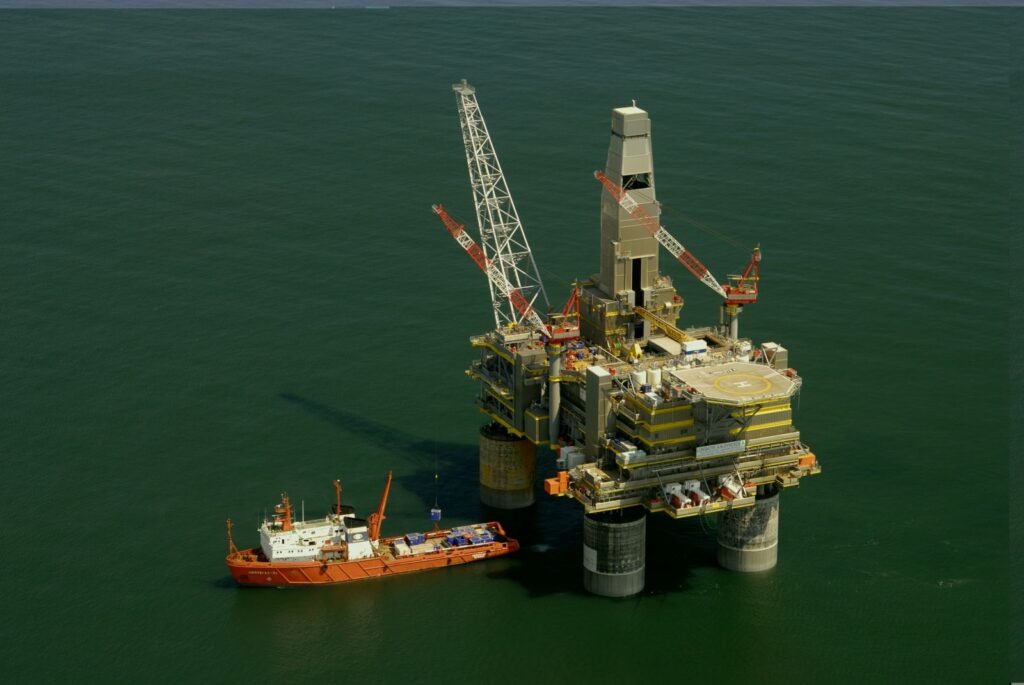
Drilling for oil and gas in the North Sea
I had a constituent get in touch off the back of my previous newsletter, putting some arguments across for oil and gas drilling in the North Sea in light of the war in Iran, as right-wing parties have been calling for.
He cited a few reasons for it: jobs, taxable revenue, reducing dependency on imported fossil fuels, and that the UK’s seemingly small share of global carbon emissions.
I am very happy that my newsletter is encouraging healthy debate, so in the spirit of that, I wanted to share parts of my response, as I have done in previous editions.
Dependency
The initial disruption to oil and gas imports was largely due to tankers being stuck on the wrong side of the Straits of Hormuz. Markets likely underpriced the impact of the next lot of tankers which would have, but did not, set sail because of the closure of the straits.
New drilling will not fix this immediate problem. Kemi Badenoch’s claim that we can be up and running in a jot is wishful thinking. While a big tranche of state investment in renewables will not solve this immediate problem either, renewables have already – and provably – improved our energy resilience.
Fossil fuels will not, because their price is set by the international market. We do not – regrettably – have a state-owned energy sector that the government can use to give favourable prices to British consumers. As I mentioned in the last edition, if the Tories and Reform lined up to call for that, they would have my full support. But they will not and so their claims will remain unsubstantiated.
Secondly, we have to expand domestic energy supply anyway. Energy interdependence may have made sense in the era of ‘peak’ globalisation, but with the world we have today, it is no longer prudent. Again, it isn’t necessarily a zero-sum game when it comes to private sector investment, but given the choice – which is exactly what we have, a choice – I would prefer the government’s limited bandwidth to be focused on clean renewables rather than oil and gas.
We have been telling the energy sector to transition for decades. Changing course now would be to cut against the grain. Green investment will create jobs and reduce our energy dependency (it already is doing that), but with the added advantage of being supplied to the market by a state provider (Great British Energy) in some cases. Clean energy costs are falling quicker across the board. It is simply more economical. We must stick the course.
Revenue
This is more nuanced. We tax oil and gas companies so highly partly because they ended up sitting on massive profits after the invasion of Ukraine. More oil and gas drilling would mean more taxable revenue, yes. But this ignores the bigger picture: the longer we take to decarbonise, the higher the costs we pay. Fossil fuel prices will remain set by the international market, leaving us vulnerable to future shocks, and necessary climate change adaptation will cost the taxpayer greatly.
Think about alcohol and cigarettes, which are also taxed incredibly highly (the vast majority of the cost of pack of cigarettes is tax). They are taxed highly to dissuade harmful consumption. If your only concern is taxable revenue, the government should be encouraging the populace to chainsmoke like Farage and enjoy regular ten-pint nights.
Now, you have a right to do that, but the government doesn’t promote such behaviour, because then the taxpayer would have to foot the far larger bill for hedonists ending up in expensive NHS care with pulmonary embolisms and strokes.
Similarly, if we encourage fossil fuels for the tax revenue, we pay more in the long run for not getting off the fossil fuel rollercoaster earlier. We need to look at the bigger picture.
Global share of emissions
I understand that the drive to reduce emissions is increasingly seen by some as a kind of pointless moral crusade that won’t benefit the consumer, especially when our contribution to global emissions seems low, at around 1%.
Well, as I hope the reader has taken from the above section, the push for towards renewables already makes sense from the most hard-headed economic perspective. It is why private investment has been pouring in; investment bankers do not spend billions for the sake of it, they do so to turn a profit.
But I believe there is still a case for leading by example. The threat from climate change is accelerating, the UK is already a global leader for decarbonisation, and I think that we can continue to have an inspirational effect (although I do accept that carbon offshoring makes this more complex).
Regardless, we are still the world’s sixth largest economy. If we don’t, then who will? The price will simply be paid by our children and our grandchildren and their children; we are mortgaging their futures.
De-linking electricity costs to gas prices
The final part of the constituent’s argument was on a different issue relating to energy, the link between electricity prices and gas prices. The price of wholesale electricity is set by “the last unit of electricity needed to meet demand at any given time.”
The constituent argued this link needed breaking, because as the cost of electricity goes down (because of renewables) total energy costs remain bottlenecked by gas prices.
I agree with them. While little over a quarter of British electricity generation comes from gas-fired plants (so the price of gas will always be reflected somewhat in electricity costs for the foreseeable), if we did separate electricity and gas prices, while making better progress on electrification and decarbonising energy production, bills would be cheaper.
Well, then – great news – that is exactly what the UK Labour Government is going to aim to do. It will weaken the link by shifting renewable energy providers onto fixed-cost contracts, which will lessen the impact of fossil fuel spikes on electricity prices.
We’ve already drilled it all
I save the best argument for last: we have nearly drilled all of it already.
I share the below excerpt from a Guardian article published at the start of this month:
“The North Sea is a declining basin. Issuing new licences to will not change that. More than 90% of the UK’s sector has already been drained, with what remains harder to get at, with supplies set to continue their steep decline in the next decade before running out by 2050, even if drilling is maximised.
“Analysis of government data by the Energy and Climate Intelligence Unit show that more than 4bn tonnes of oil has been extracted in the UK since 1975. Only about 218m tonnes are recoverable by 2050 from existing fields, and new drilling could yield another 74m tonnes. That 74m tonnes would be equivalent to 1.7% of the total that could be extracted from 1975 to 2050. There is even less gas left – new drilling would add about 1.1% to total production. In other words, all of the new drilling possible would only put off the end of the North Sea by a year or two.”
New licenses would not reduce fossil fuel dependency, they would not lower consumer bills, they would weaken our (legally binding) commitment to tackling climate change, they would dilute the global effort to decarbonise, they would send mixed messages to the energy sector and possibly damage investor confidence in renewables, which are tried, tested, proven to lead to lower bills.
In return, we would receive the grand sum of…an extra 1-2% more oil and gas.
On the contrary, the sun and wind will not be going anywhere, at least not for a few billion years.
Cumulative Disruption
The right to protest is an essential part of living in a democracy, in having a say in how the country is run. We see threats to this from Reform UK, who have pledged to repeal the Employment Rights Act, the Renters Rights Act, the Equality Act, tantamount to a bonfire of legal protections for British citizens.
The government has rightly championed these Acts. Indeed, it passed into the law the first two, and the last one was passed by the previous UK Labour Government.
I am afraid, on the right to peaceful protest, the government is moving in the opposite direction, because of its amendment to the Crime and Policing Bill on cumulative disruption, Amendment 312.
It would give police the power to ban protests on the pretext of another having recently taken place in the same area, even if it was on a separate issue. What constitutes an ‘area’ has not been clearly defined.
Without sustained, peaceful protest workers would not have fairer pay and conditions. Women would not have the vote. Protests won’t always be to your liking, nor to mine, but the right to them is essential to a healthy democracy. I spoke on the matter in the Chamber this month.
To the government’s credit, the Crime and Policing Bill will also introduce a number of much needed measures, including on intimate image abuse; deletion orders; hashing and registry of non-consensual images; regulation of online pornography; incest porn; age verification; indecent images of children.
Machynlleth for Town of Culture 2028
I had a wonderful visit to Machynlleth earlier this month, you can see what I got up to by watching this video.
It included a meeting with Biossfer Dyfi Biosphere, who I am now pleased to say have secured the long-term funding arrangements which they needed, from the Welsh Government. You can read more about that by clicking here.
It was also great to meet the Steering Committee for Machynlleth’s Town of Culture 2028 bid. They have my full support. If you live in Machynlleth and think the town would be a deserving winner, as I do, please do get in contact. I can put you in touch to see how you might be able to help get their bid over the line.
The New Deal for Working People Delivered
My number one priority during my election was to vote into law Labour’s New Deal for Working People.
This month, it came into force as the Employment Rights Act.
If you’re an employee, these new rights include, but are not limited to:
- A new right to paternity leave and unpaid parental leave from your first day on the job
- New, simpler trade union recognition rights – making it easier for workers to get unionised so they can bargain for better pay and conditions.
- Statutory Sick Pay from your first day off sick, ending the three day wait without pay
- New protections for whistleblowers – so workers can tell the truth without fear.
- A new right to leave for bereaved fathers and partners – up to 52 weeks of leave for bereaved fathers and partners.
- Fire and hire banned
- Exploitative zero-hours contracts banned
- A new Fair Work Agency enforcing these rights on your behalf.
And the minimum wage and the national living wage went up too. All in all, a big win for working people.
That’s all for this month. See you next time.

Croeso yn ôl i’m cylchlythyr.
Yn y rhifyn hwn, rwy’n trafod polisi ynni – prif fater y dydd – tarfu cronnus, pasio Deddf Hawliau Cyflogaeth yn gyfraith, a’m hymweliad â Machynlleth yn gynharach y mis hwn.
Fel bob amser, cofrestrwch ar gyfer fy nghyfryngau cymdeithasol trwy glicio ar y dolenni isod os nad ydych chi eisoes wedi ei wneud.
Gyda phob dymuniad da, Steve
Drilio am olew a nwy ym Môr y Gogledd
Yn dilyn fy nghylchlythyr diwethaf, cefais gyfathrebiad gan etholwr, yn gyflwyno rhai dadleuon dros drilio olew a nwy ym Môr y Gogledd o feddwl am y rhyfel yn Iran, fel y mae pleidiau asgell dde wedi bod yn galw amdano.
Cyfeiriodd at ychydig o resymau dros hynny: swyddi, refeniw trethadwy, lleihau dibyniaeth ar danwydd ffosil a fewnforir, a chyfran ymddangosiadol fach y DU o allyriadau carbon byd-eang.
Rwy’n hapus iawn bod fy nghylchlythyr yn annog dadl iach, felly, roeddwn i eisiau rhannu rhannau o fy ymateb, fel yr wyf wedi’i wneud mewn rhifynnau blaenorol.
Dibyniaeth
Yr oedd yr aflonyddwch cychwynnol i fewnforion olew a nwy yn bennaf oherwydd tanceri yn sownd ar ochr anghywir Culfor Hormuz. Mae’n debyg bod marchnadoedd wedi tanbrisio effaith y lot nesaf o danceri a fyddai wedi, ond na wnaeth, hwylio oherwydd cau y culfor.
Ni fydd drilio newydd yn datrys y broblem uniongyrchol hon. Mae honiad Kemi Badenoch y gallwn fod ar waith mewn eiliad yn afrealistig. Er na fydd cyfran fawr o fuddsoddiad y wladwriaeth mewn ynni adnewyddadwy yn datrys y broblem uniongyrchol hon ychwaith, mae ynni adnewyddadwy eisoes wedi gwella ein gwydnwch ynni.
Ni fydd tanwyddau ffosil, oherwydd bod eu pris yn cael ei osod gan y farchnad ryngwladol. Nid oes gennym – yn anffodus – sector ynni sy’n eiddo i’r wladwriaeth y gall y llywodraeth ei ddefnyddio i roi prisiau ffafriol i ddefnyddwyr Prydain. Fel y soniais yn y rhifyn diwethaf, pe bai’r Torïaid a Reform yn cytuno i alw am hynny, byddent yn cael fy nghefnogaeth lawn. Ond ni fyddant ac felly bydd eu honiadau’n parhau i fod heb sail.
Yn ail, mae’n rhaid i ni ehangu’r cyflenwad ynni domestig beth bynnag. Efallai bod rhyngddibyniaeth ynni wedi gwneud synnwyr yn oes globaleiddio ‘brig’, ond gyda’r byd sydd gennym heddiw, nid yw’n ddoeth mwyach. Unwaith eto, nid yw’n gêm swm sero o ran buddsoddiad y sector preifat, ond o ystyried y dewis – a dyna yn union beth sydd gennym, dewis – byddwn yn well gen i pe bai lled band cyfyngedig y llywodraeth yn canolbwyntio ar ynni adnewyddadwy glân yn hytrach nag olew a nwy.
Rydym wedi bod yn dweud wrth y sector ynni i drawsnewid ers degawdau. Byddai newid cwrs nawr yn golygu torri yn erbyn y graen. Bydd buddsoddiad gwyrdd yn creu swyddi ac yn lleihau ein dibyniaeth ar ynni (mae eisoes yn gwneud hynny), ond gyda’r fantais ychwanegol o gael ei gyflenwi i’r farchnad gan ddarparwr gwladol (Great British Energy) mewn rhai achosion. Mae costau ynni glân yn gostwng yn gyflymach ar draws y bwrdd. Yn syml, mae’n fwy economaidd. Rhaid i ni lynu wrth y cwrs.
Refeniw
Mae hyn yn fwy cymleth. Rydym yn trethu cwmnïau olew a nwy mor uchel oherwydd eu bod wedi gorffen ar elw enfawr ar ôl goresgyniad Wcráin. Byddai mwy o ddrilio olew a nwy yn golygu mwy o refeniw trethadwy; ond mae hyn yn anwybyddu’r darlun ehangach: po hiraf y byddwn yn ei gymryd i ddadgarboneiddio, yr uchaf yw’r costau a dalwn. Bydd prisiau tanwydd ffosil yn parhau i gael eu gosod gan y farchnad ryngwladol, gan ein gadael yn agored i sioc yn y dyfodol, a bydd addasu angenrheidiol i newid hinsawdd yn costio’n fawr i’r trethdalwr.
Meddyliwch am alcohol a sigaréts, sydd hefyd yn cael eu trethu’n anhygoel o uchel (y mwyafrif helaeth o gost pecyn o sigaréts yw treth). Maent yn cael eu trethu’n uchel i atal defnydd niweidiol. Os mai refeniw trethadwy yw eich unig bryder, dylai’r llywodraeth fod yn annog y boblogaeth i ysmygu fel Farage a mwynhau nosweithiau deg peint yn rheolaidd.
Nawr, mae gennym yr hawl i wneud hynny, ond nid yw’r llywodraeth yn hyrwyddo ymddygiad o’r fath, oherwydd byddai’n rhaid i’r trethdalwr dalu’r bil llawer mwy mewn gofal GIG drud gydag emboledd ysgyfeiniol a strôcs.
Yn yr un modd, os ydym yn annog tanwydd ffosil ar gyfer y refeniw treth, rydym yn talu mwy yn y tymor hir am beidio â dod oddi ar y rholercoster tanwydd ffosil yn gynharach. Mae angen i ni edrych ar y darlun ehangach.
Cyfran fyd-eang o allyriadau
Rwy’n deall bod yr ymgyrch i leihau allyriadau yn cael ei gweld fwyfwy gan rai fel math o groesgad foesol ddibwrpas na fydd o fudd i’r defnyddiwr, yn enwedig pan fo ein cyfraniad at allyriadau byd-eang yn ymddangos yn isel, tua 1%.
Wel, fel rwy’n gobeithio bod y darllenydd wedi’i ddeall o’r adran uchod, mae’r gwthio tuag at ynni adnewyddadwy eisoes yn gwneud synnwyr o’r safbwynt economaidd. Dyna pam mae buddsoddiad preifat wedi bod yn llifo i mewn; nid yw bancwyr buddsoddi yn gwario biliynau yn ddifeddwl, maen nhw’n gwneud hynny i wneud elw.
Ond rwy’n credu mewn arwain trwy esiampl. Mae’r bygythiad o newid hinsawdd yn cyflymu, mae’r DU eisoes yn arweinydd byd-eang ar gyfer datgarboneiddio, ac rwy’n credu y gallwn barhau i gael effaith ysbrydoledig (er fy mod yn derbyn bod allforio carbon yn gwneud hyn yn fwy cymhleth).
Serch hynny, ni yw chweched economi fwyaf y byd o hyd. Os na wnawn ni, pwy fydd? Bydd y pris yn cael ei dalu gan ein plant a’n hwyrion a’u plant; rydym yn morgeisio eu dyfodol.
Dadgysylltu costau trydan â phrisiau nwy
Roedd rhan olaf dadl yr etholwr ar fater gwahanol yn ymwneud ag ynni, y cysylltiad rhwng prisiau trydan a phrisiau nwy. Mae pris trydan cyfanwerthu wedi’i osod gan “yr uned olaf o drydan sydd ei hangen i ddiwallu’r galw ar unrhyw amser penodol.”
Dadleuodd yr etholwr fod angen torri’r cysylltiad hwn, oherwydd wrth i gost trydan fynd i lawr (oherwydd ynni adnewyddadwy) mae cyfanswm costau ynni yn parhau i fod yn rhwystredig gan brisiau nwy.
Rwy’n cytuno â nhw. Er bod ychydig dros chwarter o gynhyrchu trydan Prydain yn dod o blanhigion nwy (felly bydd pris nwy bob amser yn cael ei adlewyrchu i ryw raddau yng ngostau trydan am y cyfnod rhagweladwy), pe baem yn gwahanu prisiau trydan a nwy, wrth wneud cynnydd gwell ar drydaneiddio a datgarboneiddio cynhyrchu ynni, byddai biliau’n rhatach.
Wel, felly – newyddion gwych – dyna’n union yr hyn y mae Llywodraeth Lafur y DU yn mynd i anelu ato. Bydd yn gwanhau’r cysylltiad trwy symud darparwyr ynni adnewyddadwy i gontractau cost sefydlog, a fydd yn lleihau effaith pigau tanwydd ffosil ar brisiau trydan.
Rydym eisoes wedi drilio’r cyfan.
Rwy’n cadw’r ddadl orau am y diwedd: rydym bron wedi drilio’r cyfan eisoes.
Rwy’n rhannu’r darn isod o erthygl yn y Guardian a gyhoeddwyd ar ddechrau’r mis hwn:
“The North Sea is a declining basin. Issuing new licences to will not change that. More than 90% of the UK’s sector has already been drained, with what remains harder to get at, with supplies set to continue their steep decline in the next decade before running out by 2050, even if drilling is maximised.
“Analysis of government data by the Energy and Climate Intelligence Unit show that more than 4bn tonnes of oil has been extracted in the UK since 1975. Only about 218m tonnes are recoverable by 2050 from existing fields, and new drilling could yield another 74m tonnes. That 74m tonnes would be equivalent to 1.7% of the total that could be extracted from 1975 to 2050. There is even less gas left – new drilling would add about 1.1% to total production. In other words, all of the new drilling possible would only put off the end of the North Sea by a year or two.”
Ni fyddai trwyddedau newydd yn lleihau dibyniaeth ar danwydd ffosil, ni fyddent yn gostwng biliau defnyddwyr, byddent yn gwanhau ein hymrwymiad (sy’n gyfreithiol rwymol) i fynd i’r afael â newid hinsawdd, byddent yn gwanhau’r ymdrech fyd-eang i ddadgarboneiddio, byddent yn anfon negeseuon cymysg i’r sector ynni ac o bosibl yn niweidio hyder buddsoddwyr mewn ynni adnewyddadwy, sydd wedi’i brofi, ei roi ar brawf, a’i brofi i arwain at filiau is.
Yn gyfnewid, byddem yn derbyn y swm mawr o… 1-2% yn fwy o olew a nwy.
I’r gwrthwyneb, ni fydd yr haul a’r gwynt yn mynd i unman, o leiaf nid am ychydig biliwn o flynyddoedd.
Tarfu Cronnus
Mae’r hawl i brotestio yn rhan hanfodol o fyw mewn democratiaeth, o gael dweud eich dweud yn sut mae’r wlad yn cael ei rhedeg. Rydym yn gweld bygythiadau i hyn gan Reform UK, sydd wedi addo diddymu’r Ddeddf Hawliau Cyflogaeth, y Ddeddf Hawliau Rhentwyr, y Ddeddf Cydraddoldeb, sy’n gyfystyr â thân gwyllt o amddiffyniadau cyfreithiol i ddinasyddion Prydain.
Mae’r llywodraeth wedi hyrwyddo’r Deddfau hyn yn briodol. Yn wir, fe basiodd yn gyfraith y ddau gyntaf, a’r un olaf a basiwyd gan Lywodraeth Lafur flaenorol y DU.
Mae arnaf ofn, ar yr hawl i brotestio’n heddychlon, bod y llywodraeth yn symud i’r cyfeiriad arall, oherwydd ei gwelliant i’r Bil Troseddu a Phlismona ar tarfu cronnus, Gwelliant 312.
Byddai’n rhoi’r pŵer i’r heddlu wahardd protestiadau ar yr esgus bod un arall wedi digwydd yn ddiweddar yn yr un ardal, hyd yn oed os oedd ar fater ar wahân. Nid yw’r hyn sy’n ‘ardal’ wedi’i ddiffinio’n glir.
Heb brotest heddychlon a chynaliadwy, ni fyddai gan weithwyr gyflog ac amodau tecach. Ni fyddai gan fenywod yr hawl i bleidleisio. Ni fydd protestiadau bob amser at eich dant chi, na fy un i, ond mae’r hawl iddynt yn hanfodol i ddemocratiaeth iach. Siaradais ar y mater yn y Siambr y mis hwn.
Er clod i’r llywodraeth, bydd y Mesur Troseddu a Phlismona hefyd yn cyflwyno nifer o fesurau sydd eu hangen yn fawr, gan gynnwys ar gam-drin delweddau personol; gorchmynion dileu; hashio a chofrestru delweddau heb ganiatâd; rheoleiddio pornograffi ar-lein; porn llosgach; gwirio oedran; delweddau anweddus o blant.
Machynlleth am Tref Diwylliant 2028
Cefais ymweliad hyfryd â Machynlleth yn gynharach y mis hwn, gallwch weld beth wnes idrwy wylio’r fideo hwn.
Roedd yn cynnwys cyfarfod â Biosffer Dyfi, ac rwy’n falch o ddweud nawr eu bod wedi sicrhau’r trefniadau ariannu hirdymor yr oeddent eu hangen, gan Lywodraeth Cymru. Gallwch ddarllen mwy am hynny drwy glicio yma.
Roedd hefyd yn wych cwrdd â Phwyllgor Llywio cais Tref Diwylliant Machynlleth 2028. Mae ganddynt fy nghefnogaeth lawn. Os ydych chi’n byw ym Machynlleth ac yn meddwl y byddai’r dref yn enillydd haeddiannol, fel yr wyf fi, cysylltwch â mi. Gallaf eich rhoi mewn cysylltiad i weld sut y gallech chi helpu i gael eu cais dros y llinell.
Y Fargen Newydd i Bobl sy’n Gweithio Wedi’i Chyflawni
Fy mhrif flaenoriaeth yn ystod fy etholiad oedd pleidleisio i mewn i gyfraith Bargen Newydd Llafur i Bobl sy’n Gweithio.
Y mis hwn, daeth i rym fel y Ddeddf Hawliau Cyflogaeth.
Os ydych chi’n weithiwr, mae’r hawliau newydd hyn yn cynnwys, ond nid ydynt yn gyfyngedig i:
- Hawl newydd i absenoldeb tadolaeth ac absenoldeb rhiant di-dâl o’ch diwrnod cyntaf yn y swydd
- Hawliau cydnabod undebau llafur newydd, symlach – gan ei gwneud hi’n haws i weithwyr ymuno ag undeb fel y gallant fargeinio am gyflog ac amodau gwell.
- Tâl Salwch Statudol o’ch diwrnod cyntaf i ffwrdd o salwch, gan ddod â’r aros tridiau heb dâl i ben
- Amddiffyniad newydd i ‘whistleblowers’ – fel y gall gweithwyr ddweud y gwir heb ofn.
- Hawl newydd i absenoldeb i dadau a phartneriaid sydd wedi colli rhywun – hyd at 52 wythnos o absenoldeb i dadau a phartneriaid sydd wedi colli rhywun.
- Diswyddo a chyflogi wedi’u gwahardd
- Contractau oriau sero camfanteisiol wedi’u gwahardd
- Asiantaeth Gwaith Teg newydd yn gorfodi’r hawliau hyn ar eich rhan.
Ac aeth yr isafswm cyflog a’r cyflog byw cenedlaethol i fyny hefyd. Felly, buddugoliaeth fawr i bobl sy’n gweithio.
Dyna’r cyfan am y mis hwn. Hwyl am y tro.